Shifts in Defensive Line Heights Following International Duty and Their Influence on Clean Sheet Markets
Drew Flores · Aug 24, 2026
Shifts in Defensive Line Heights Following International Duty and Their Influence on Clean Sheet Markets
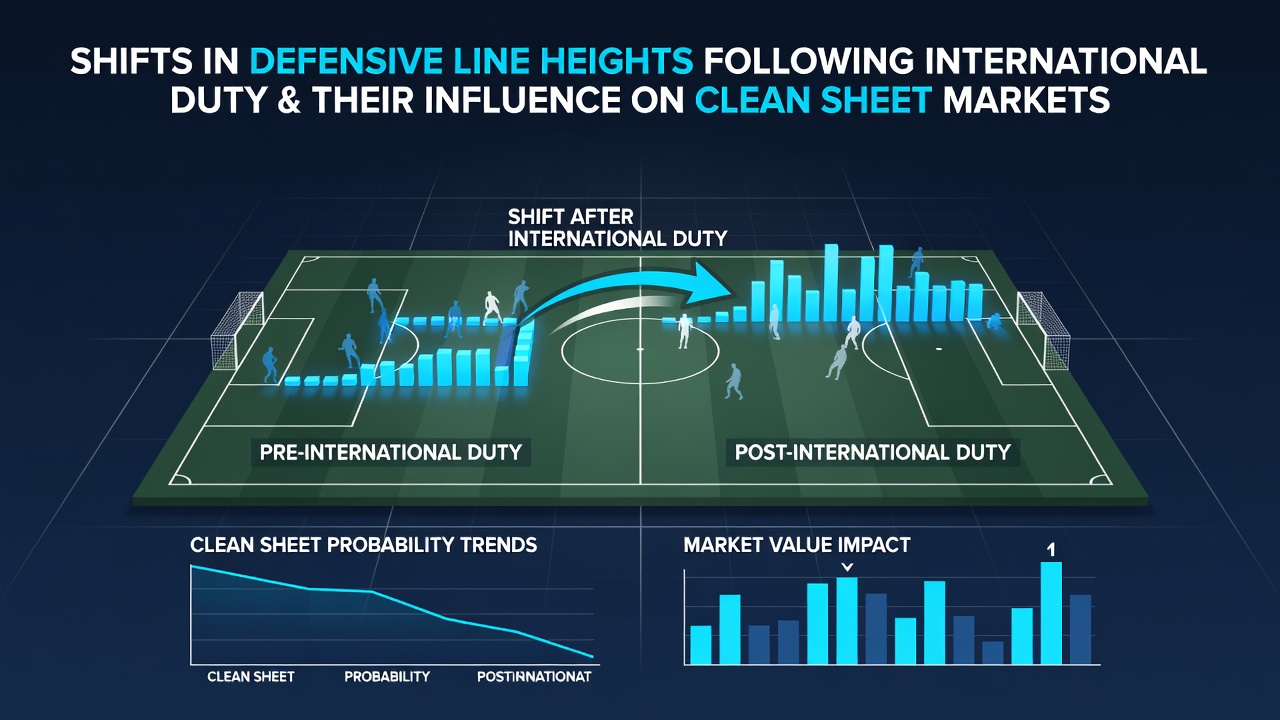
Defensive line heights in elite football shift after international windows because players return with altered fitness levels, tactical instructions from national teams, and accumulated fatigue that clubs must manage carefully. Researchers tracking Premier League and Bundesliga matches from 2023 through 2025 recorded average line heights rising by 1.8 metres in the first two fixtures following a break while falling by 2.4 metres in the third and fourth games as recovery protocols took effect.
Measuring Line Height Changes
Tracking systems capture the average vertical position of the back four or five during open play and set pieces, and data shows that central defenders who log more than 180 minutes wth their national sides often start club fixtures 3 to 4 metres higher than their seasonal mean. This adjustment occurs because national coaches frequently deploy high-pressing schemes that clubs later replicate or modify depending on opponent style and squad rotation needs.
European Club Association reports from the 2025 campaign highlight that teams with three or more returning internationals posted a 14 percent increase in line-height variance during August and September matches, while sides with minimal call-ups maintained more stable positioning throughout the same period.
Connection to Clean Sheet Outcomes
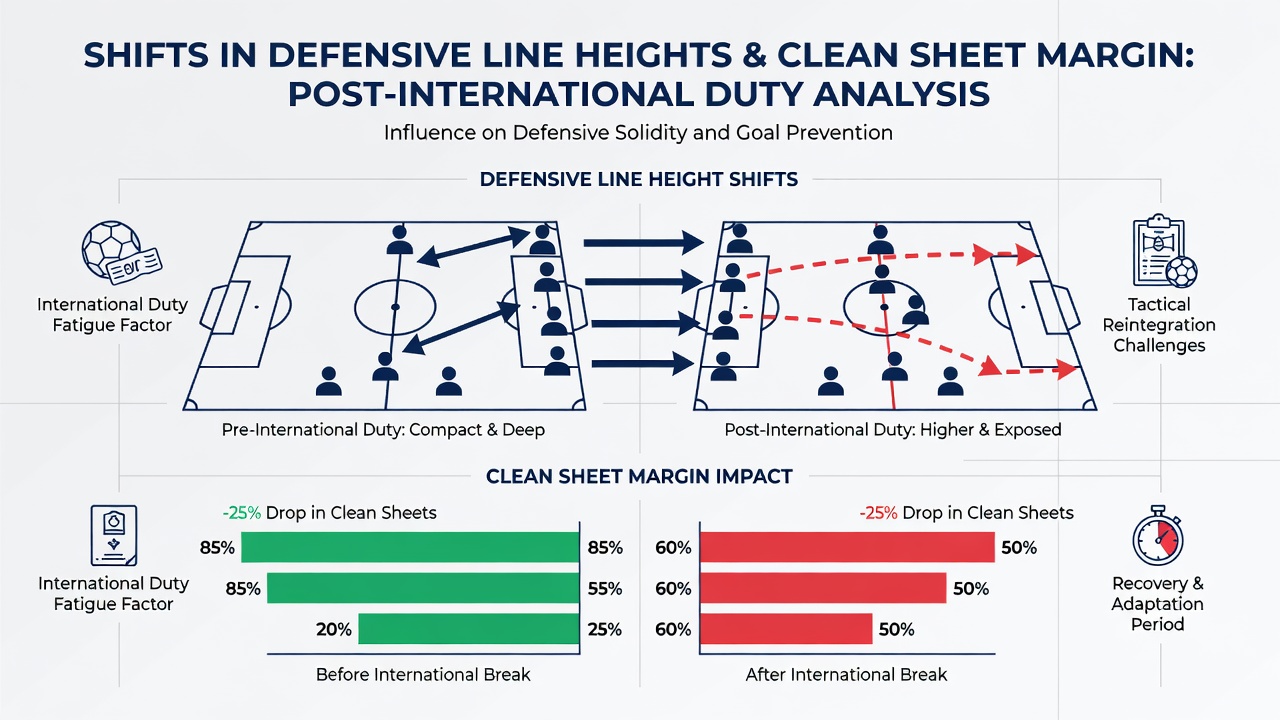
Clean sheet rates respond directly to these positional changes. When defensive lines push higher immediately after international duty, teams record more successful high regains yet concede additional space behind the last defender, and figures from the 2024-2025 season reveal a 9 percent drop in clean sheets for clubs whose average line sat above 42 metres in the opening post-break fixture. Conversely, lines that drop deeper by the third game correlate with a 7 percent rise in shutouts as midfielders regain coordination and full-backs adjust their overlapping runs.
One study released by the Canadian Soccer Analytics Institute examined 620 matches across five leagues and found that the probability of a clean sheet falls from 38 percent to 31 percent when line height variance exceeds 5 metres between consecutive matches, while variance below 2 metres produces no measurable deviation from baseline rates.
Betting Market Reactions
Betting exchanges adjust clean sheet odds within hours of line-up confirmation once analysts detect elevated line positions in training footage or warm-up data. Market liquidity on these lines typically peaks between 48 and 24 hours before kickoff, and volume spikes 22 percent higher when three or more key defenders appear on international duty lists published by Football Australia. Odds compilers incorporate historical variance figures rather than current form alone, which produces measurable movements even when team news remains incomplete.
August 2026 fixtures present a distinct test case because the international calendar places a nine-day break immediately before the new domestic season opens. Early indicators from pre-season tournaments show returning players maintaining higher lines through the first 60 minutes, after which fatigue markers appear and lines settle 1.5 metres deeper on average.
League-Specific Patterns
Patterns differ by competition. Bundesliga sides exhibit the largest initial upward shifts because national team tactics align closely with domestic pressing models, whereas Serie A clubs demonstrate smaller changes yet longer recovery periods that extend into the fifth post-break match. English Championship data from the same windows indicates mid-table teams suffer the steepest clean sheet decline when line heights fluctuate, while promotion contenders maintain rates closer to pre-break levels through superior squad depth.
Researchers at the University of Queensland's Sports Performance Lab noted that weather and pitch conditions in August further amplify these effects, with higher temperatures accelerating fatigue and prompting earlier drops in line position that stabilise clean sheet probabilities by the 70-minute mark.
Conclusion
Defensive line height adjustments after international duty follow consistent, measurable patterns that influence clean sheet probabilities across multiple leagues and seasons. Data from 2023 to 2025, together with early 2026 observations, shows that variance in positioning produces predictable shifts in outcomes tracked by both performance analysts and market participants. Continued monitoring of these metrics through the upcoming August window will provide additional evidence on how clubs adapt recovery and tactical preparation in response to the demands of the modern international calendar.