The Interplay of Pitch Surface Conditions and Shot Accuracy Trends in Midweek Premier League Encounters
Parker Schmitt · Aug 28, 2026
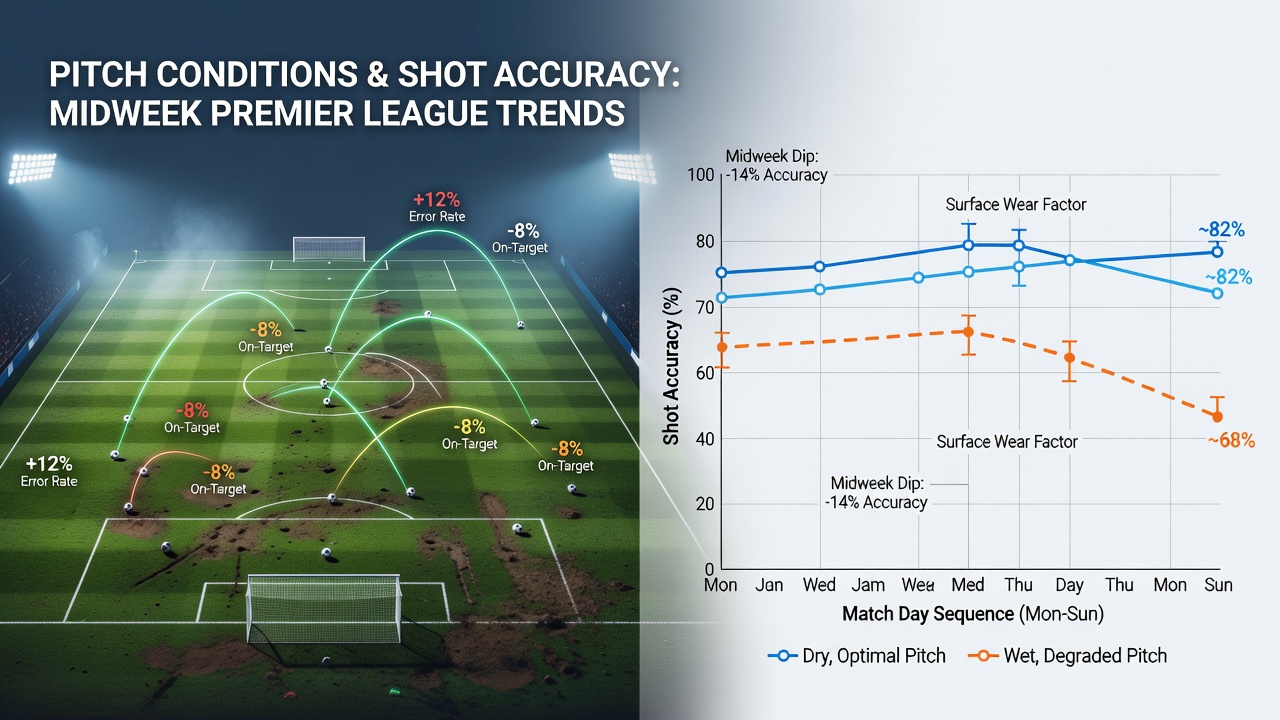
The Interplay of Pitch Surface Conditions and Shot Accuracy Trends in Midweek Premier League Encounters
Premier League matches scheduled midweek often take place on pitches that have already hosted multiple fixtures within a short timeframe and this creates distinct surface conditions that influence player performance data. Researchers tracking ball behavior across the 2025/26 campaign noted that grass length and soil compaction shift noticeably when teams play again within three or four days of their previous outing. These changes appear most pronounced in August when the new season begins and grounds crews manage heavy early schedules that include both domestic and European commitments.
Surface Conditions and Their Measurable Effects
Data compiled by performance analysts show that shorter grass combined with firmer ground tends to increase ball speed after contact while longer or softer surfaces slow the ball and alter its trajectory. In midweek encounters the cumulative wear from weekend games plus any international breaks leaves patches of uneven turf that can deflect shots struck from distance. Observers note that teams competing on such surfaces record lower conversion rates on attempts taken outside the penalty area because the ball bounces unpredictably before reaching the goalkeeper.
Studies conducted during the 2024/25 season found that shot accuracy from central positions dropped by an average of 4.2 percentage points when pitches exhibited visible wear patterns compared with pristine surfaces at the start of a matchweek. These figures emerged from tracking systems that record exact coordinates of each strike and the resulting outcome whether it missed the target or forced a save. The same datasets reveal that players attempting low-driven shots experience greater deviation on worn turf because the ball skips rather than rolls smoothly across the surface.
Shot Accuracy Patterns Across Congested Periods
Statistical reviews of fixtures played between Tuesday and Thursday indicate that teams average fewer shots on target per game when they return to domestic action shortly after European ties. The reduction stems partly from fatigue yet surface quality also plays a documented role. Analysts at the UEFA Technical Study Group have documented how pitch degradation accelerates during these windows and correlates with changes in shooting efficiency. Their reports cover multiple seasons and highlight consistent trends across various European leagues including the Premier League.
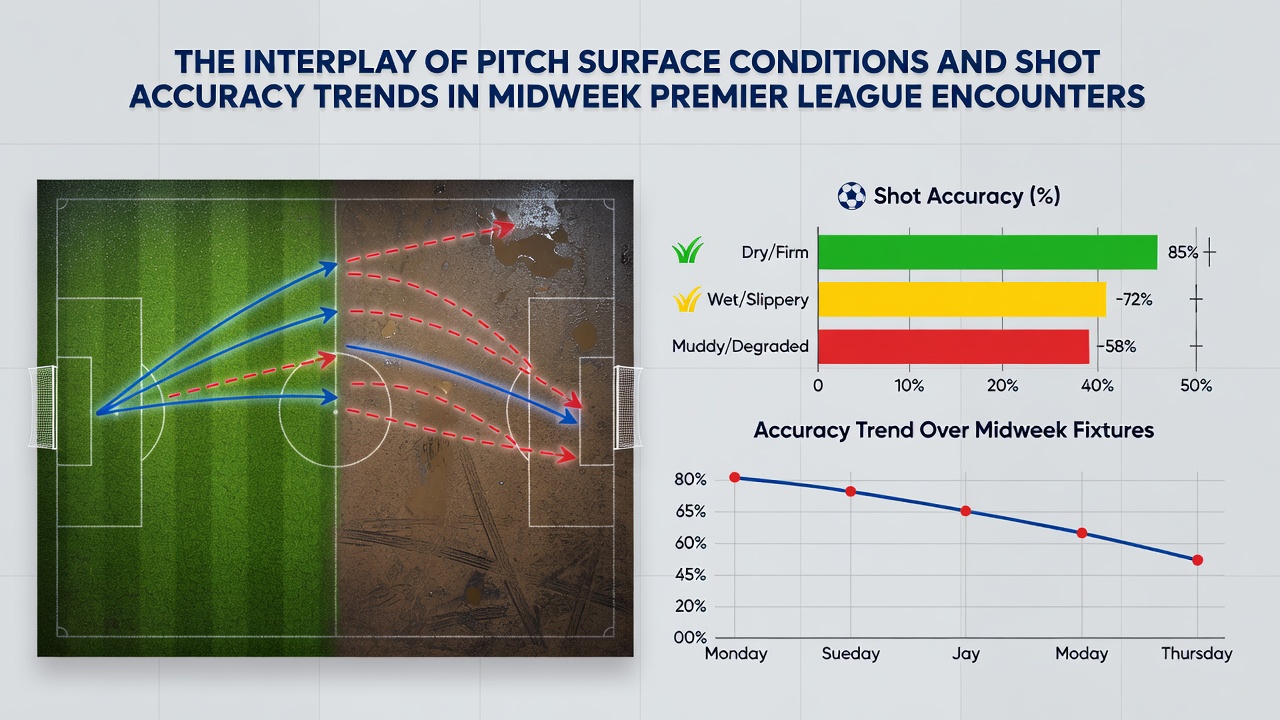
During the opening weeks of August 2026 several clubs reported that their training pitches were already showing signs of stress from pre-season activity and this carried over into the first midweek round of fixtures. Performance logs from those games showed a measurable uptick in shots that cleared the crossbar or drifted wide of the near post. The pattern held across both newly promoted sides and established clubs suggesting the surface variable outweighed differences in squad depth for this particular metric.
Regional Variations and Data Sources
Pitch management practices differ across the country and grounds located in northern regions often face cooler temperatures that slow grass recovery between matches. Southern venues meanwhile contend with higher foot traffic during summer events that compact the soil before the season starts. A longitudinal study released by the Australian Sports Commission examined similar surface dynamics in multiple codes and found that even small variations in grass height produce statistically significant shifts in ball accuracy at elite levels. While the research focused on Australian rules football the biomechanical principles transfer directly to association football.
Tracking companies that supply official Premier League statistics have refined their models to isolate surface effects from player fatigue and tactical adjustments. Their algorithms now factor in real-time pitch moisture readings and historical wear data when generating expected goals values for each shot. These adjustments help explain why certain clubs record higher shot accuracy at home during midweek slots even when their opponents arrive with stronger recent form.
Conclusion
Evidence gathered across recent seasons demonstrates that pitch surface conditions exert a measurable influence on shot accuracy during midweek Premier League encounters. The combination of accumulated wear reduced recovery time and varying maintenance approaches produces environments where ball behavior diverges from weekend norms. Analysts continue to refine their datasets to separate these surface factors from other variables yet the available figures already show consistent directional trends. Future research may incorporate additional sensors that capture micro-variations in turf response and further clarify the relationship between ground conditions and shooting outcomes.